TREAT Study
Characterizing Typical and Atypical Trajectories of Behavioral & Brain Development
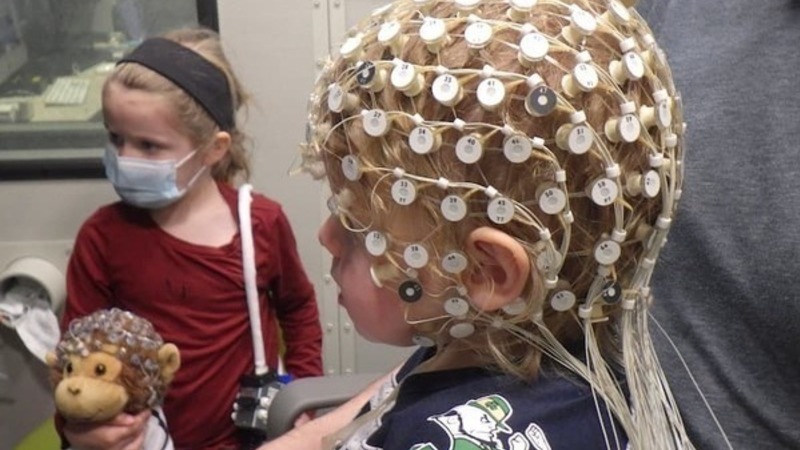
The TREAT study aims to understand how neurotypical and autistic children process social and nonsocial rewards using EEG/ERP analysis and behavioral tasks. Two EEG paradigms are studied including an adapted version of the "doors task" and a new experimental paradigm called "epeekaboo". EEG data is then processed to determine the elicited neural responses to both social and nonsocial rewarding images. The behavioral tasks include a novel iteration of the progressive ratio tasks that are developmentally appropriate for young children and a developmental assessment. 40 children aged 3-5 years have completed the TREAT study with 22% from the minority population and 78% white. Data is currently still being analyzed.
We are currently recruiting children aged 3-5 years old who have not received the autism diagnosis or have had concerns about a diagnosis in the past. We are currently aiming to recruit boys who meet these criteria.
Funded By
Brain & Behavior Research Foundation Young Investigator Grant; Donations
Research Impact
Motivation and effort are aspects of learning that are keys to many early interventions for autistic children. With this information, we can learn to individualize early interventions for autistic children, enhancing the therapeutic outcomes. We will also use this information to provide insight into the social motivation hypothesis of autism which posits that autistic children are less motivated by social interactions as opposed to their neurotypical counterparts.
Breakthrough Research on Autism & Inclusive Neurodevelopment (BRAIN) Lab
Investigator
-

Professor of Psychology